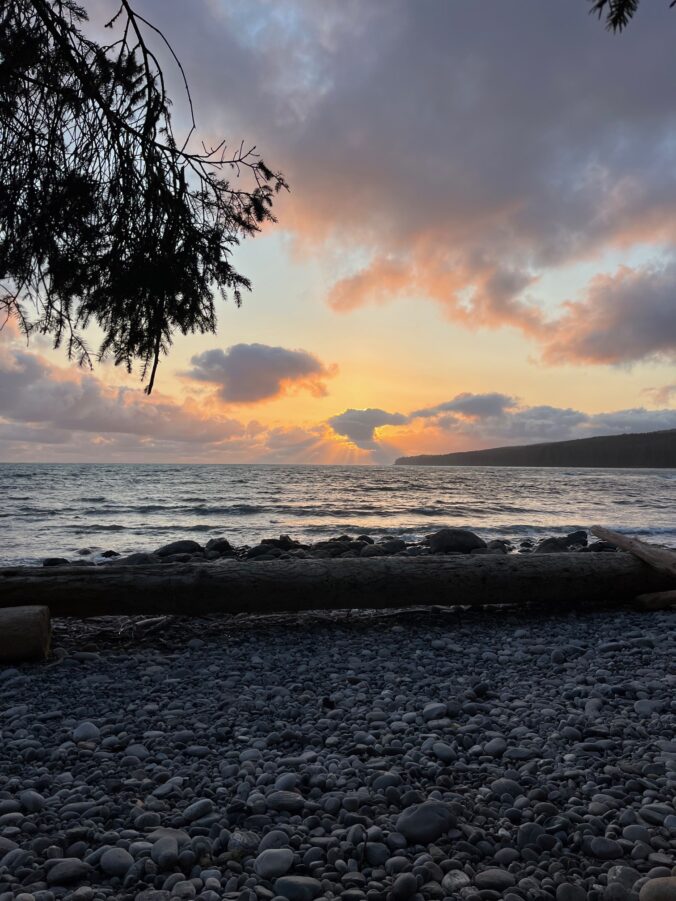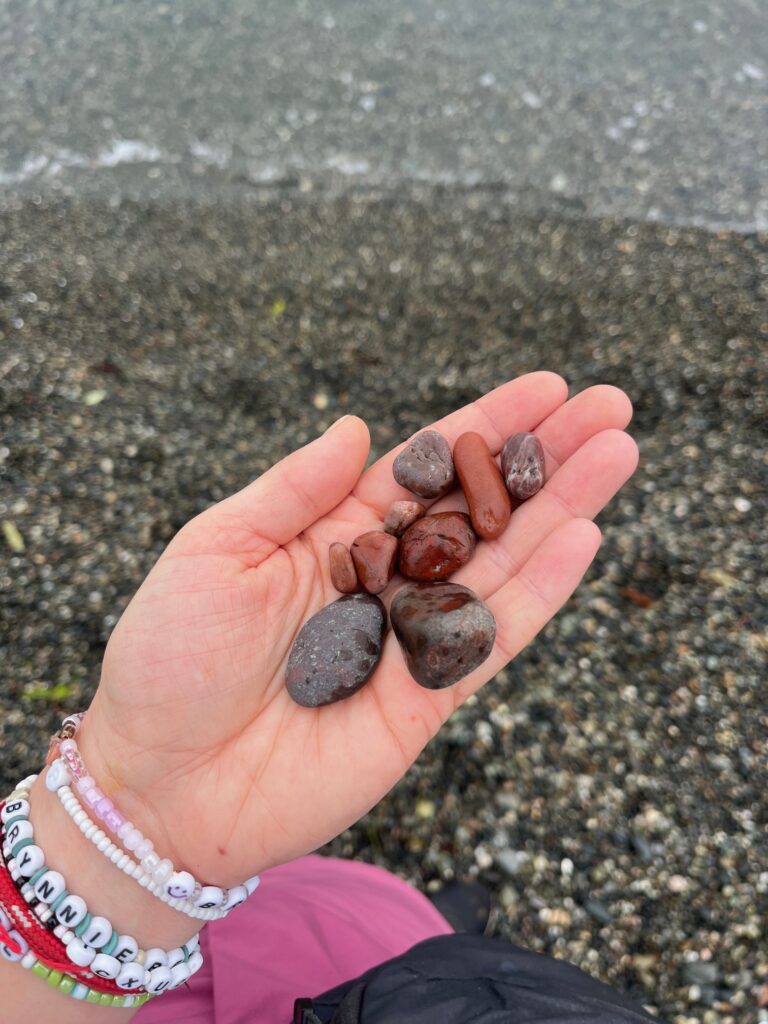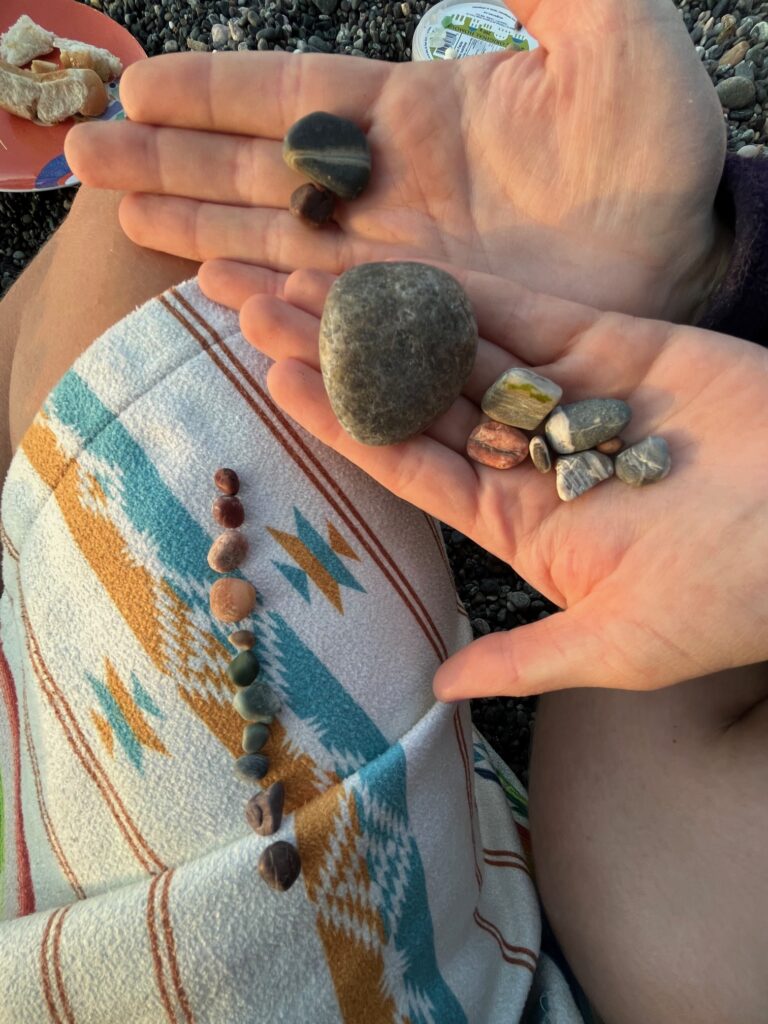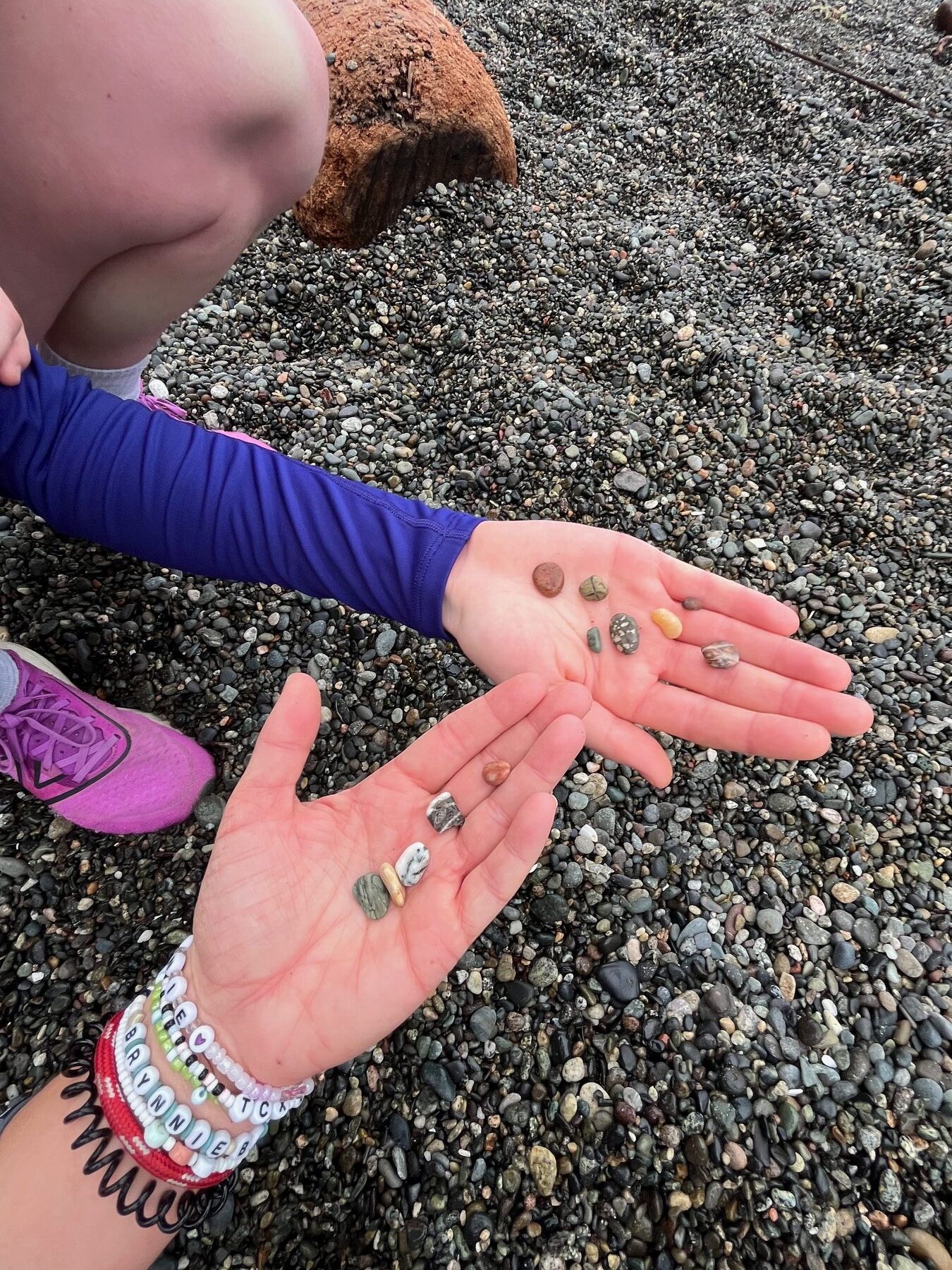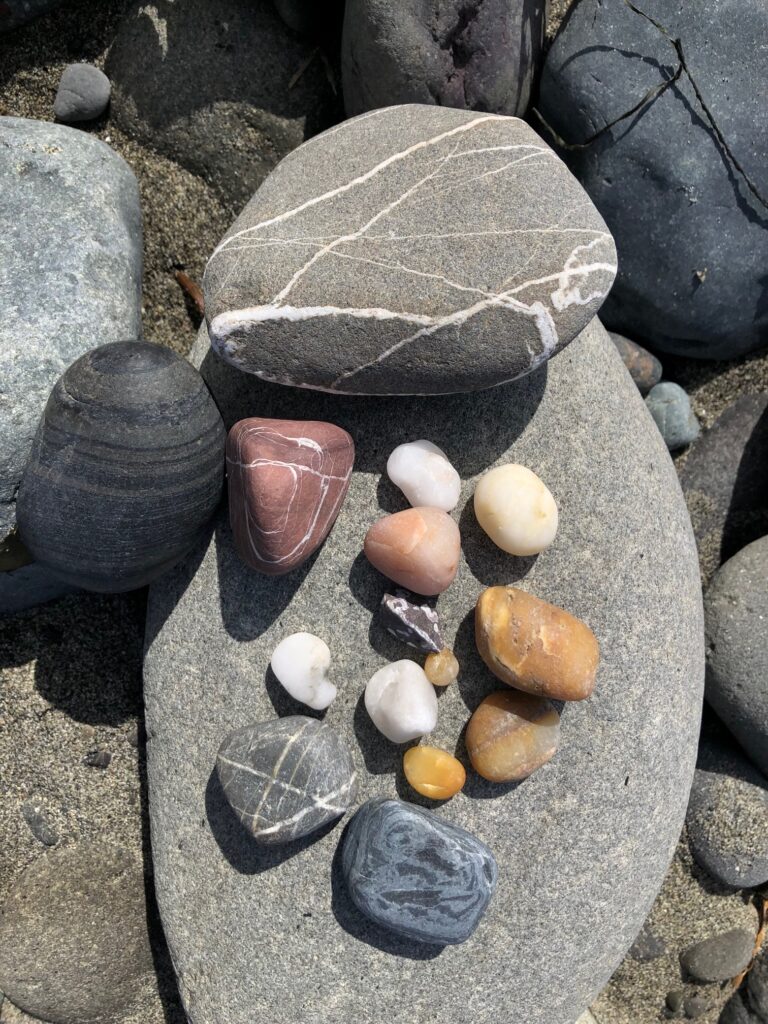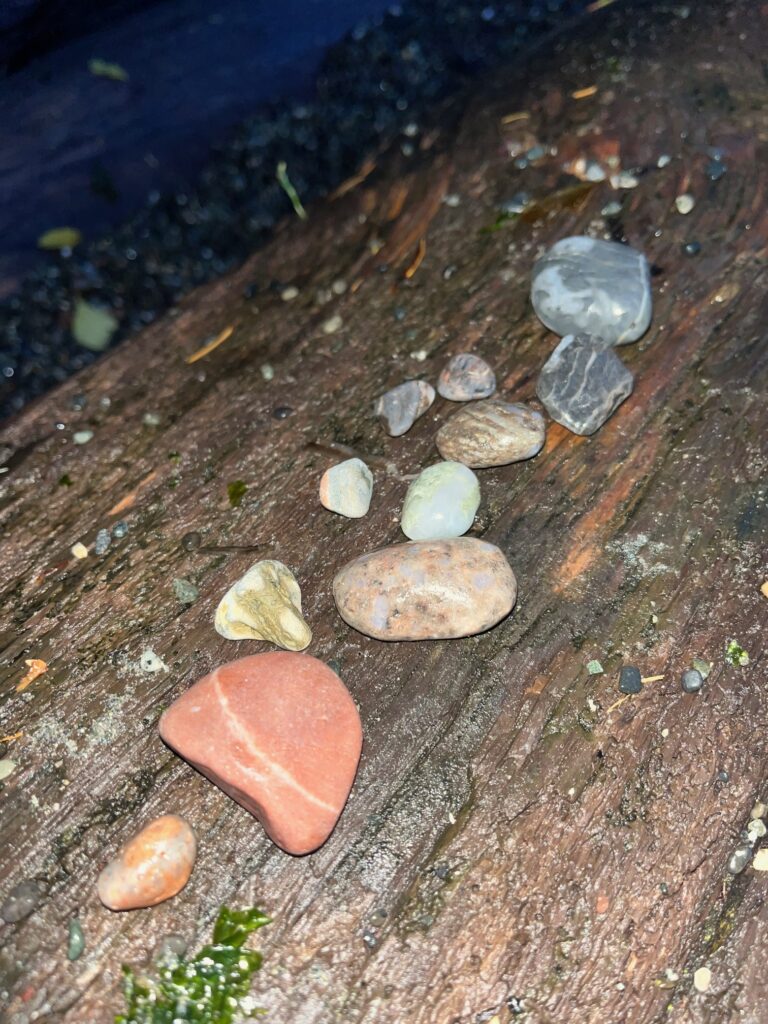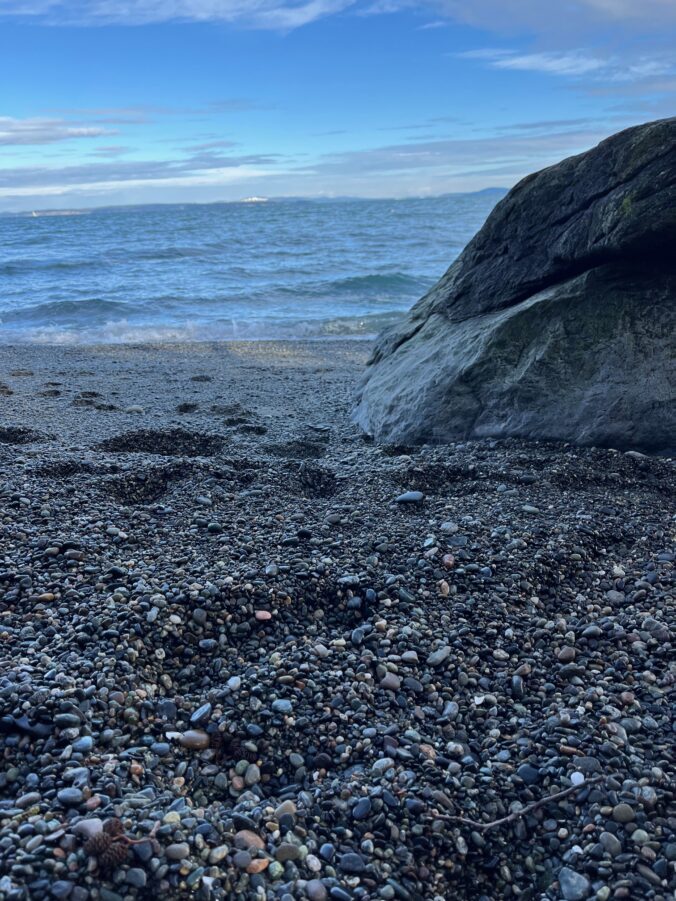
Welcome to weekly class reelections and blogs about rocks!

Category: Inquiry Blog Posts

What I learned and what’s next!

This inquiry blog journey started with me, my rock collection and curiosity to learn more. I did not know where exactly I would get to when I started this project, but I have learned so much but still feel like there is more I can explore when it comes to rocks. I have never taken a geology course, but thanks to technology, I can successfully identify various common rocks you can find on your local Victoria beaches. I have learned what to look for and the differences between rocks. Along with the rock identification process, I learned about the different rock healing properties, indigenous connections, and different ways to incorporate rocks into BC curriculum.
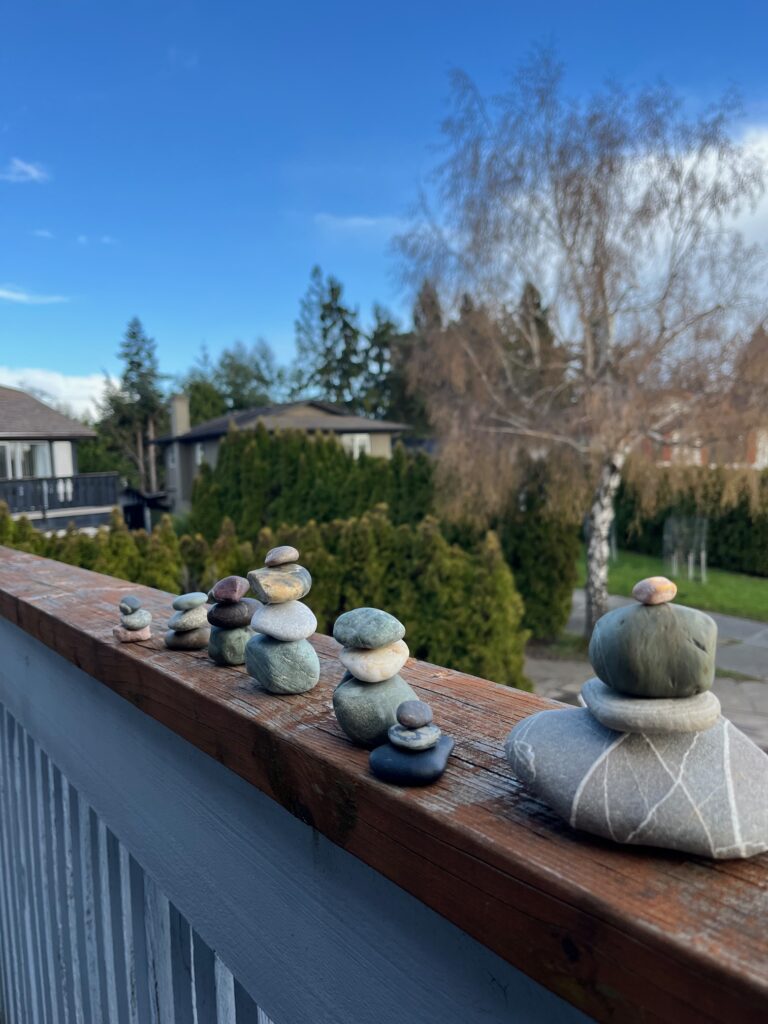
multiple stacks of balanced rocks
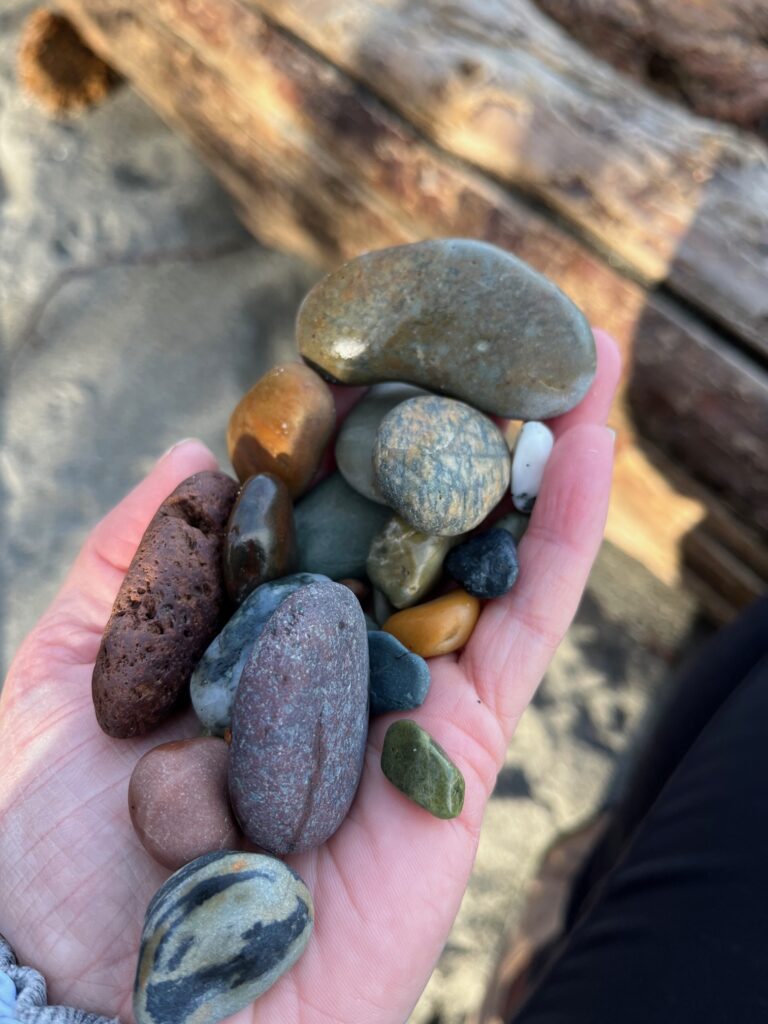
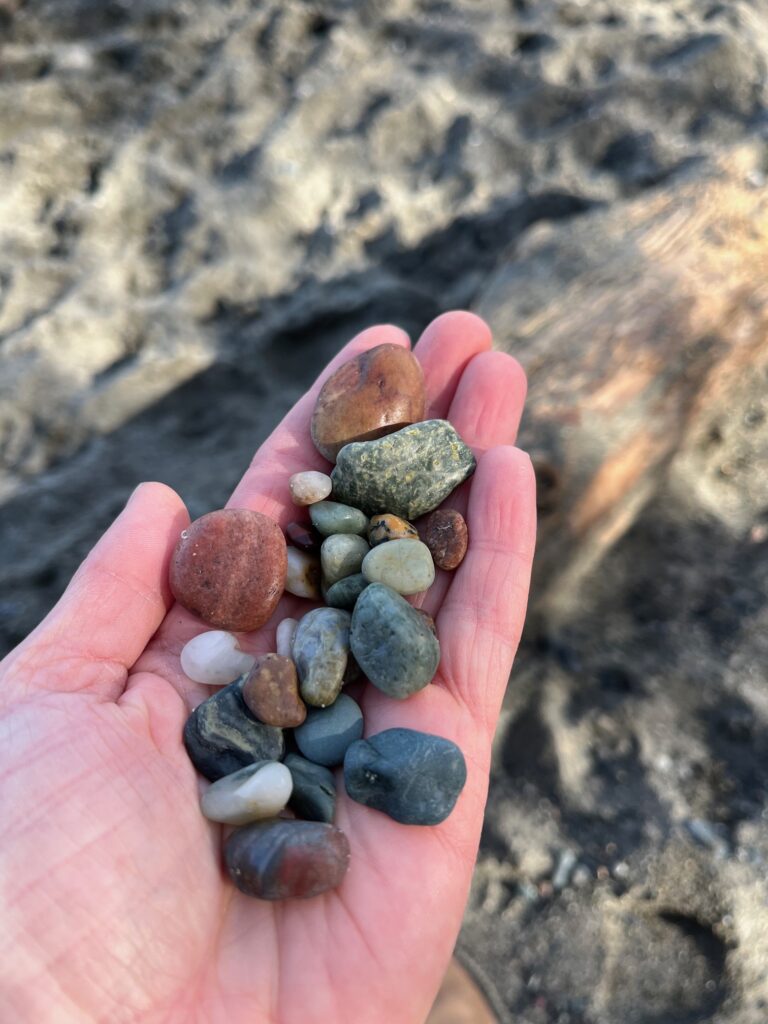
small rocks in hand
rocks and logs on beach

So what’s next? I am definitely not done with my rock journey. I want to continue learning more and developing my rock knowledge so I can identify more types of rocks. When time permits it I would love to take a class on how to identify rocks by their minerals and using the rock hammer and everything! For now, I will keep collecting rocks and finding different ways to do art with rocks and bring them into the classroom for my kiddos to enjoy, too.
My Rock Balancing Journey

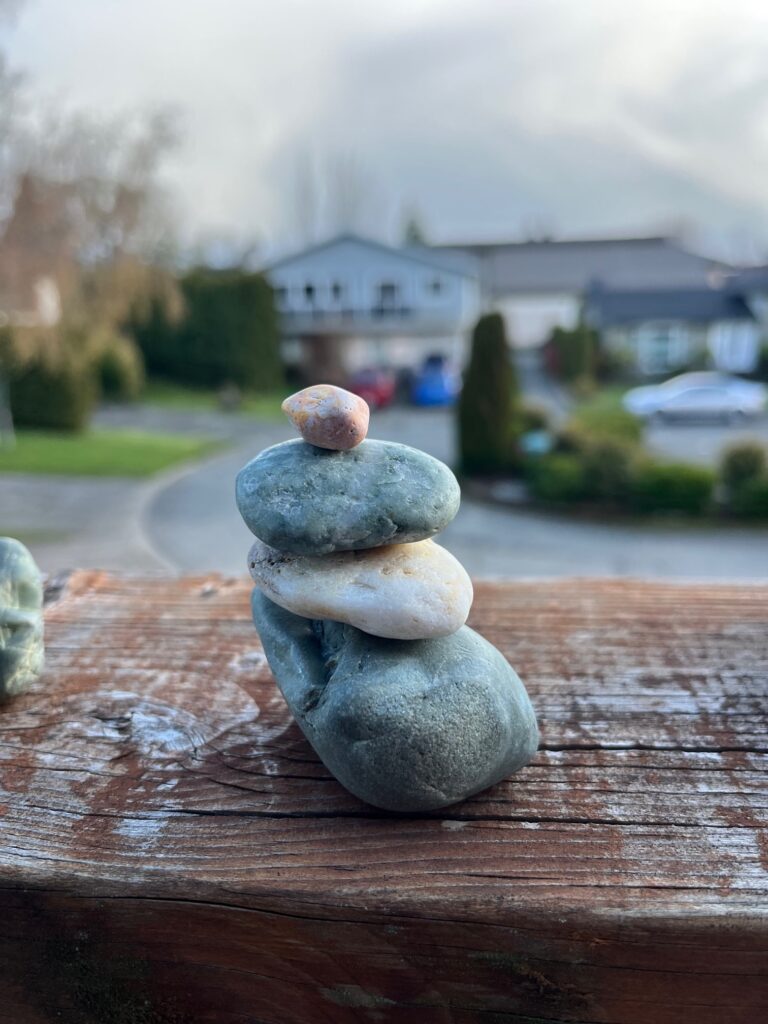
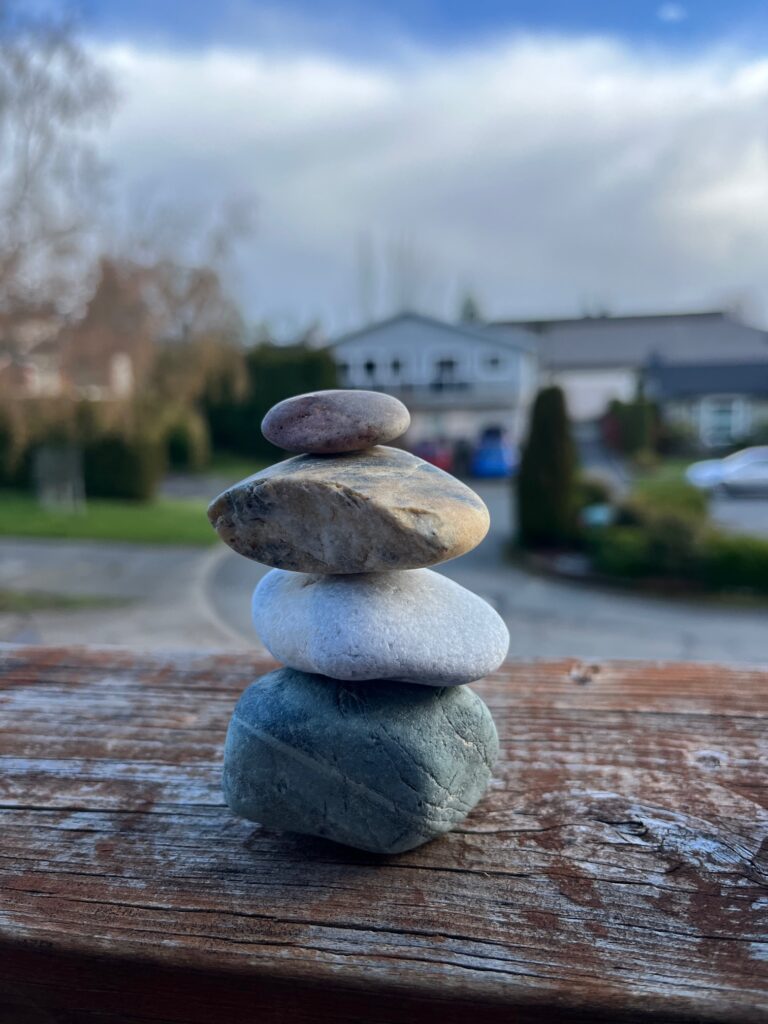
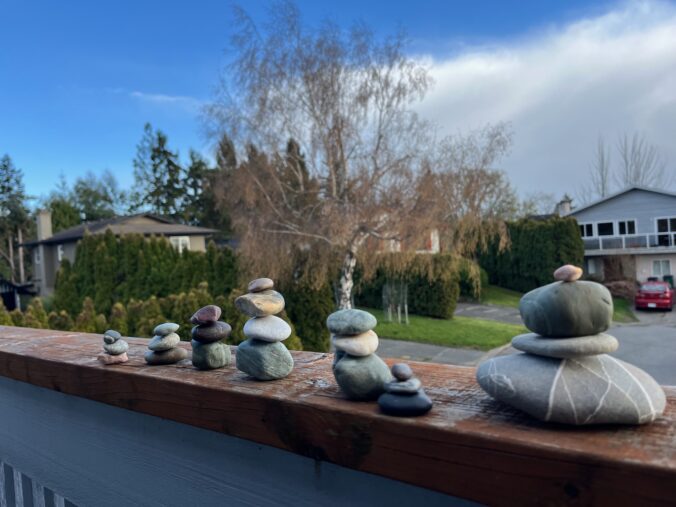
After learning about Jock’s story and his journey with balancing rocks in one of my previous blog posts, I wanted to try out some rock stacking myself. I originally wanted to make a whole event out of it and go to a beach and collect new rocks to use to stack on my own rock balancing journey. Unfortunately, I kept not finding the time to head to the beach. Instead, I decided to use the rocks I have already collected to try stacking them. I had a mix of rocks that were smooth and flat and good for balancing, as well as some rounder, more textured rocks that may not have seemed ideal for balancing.

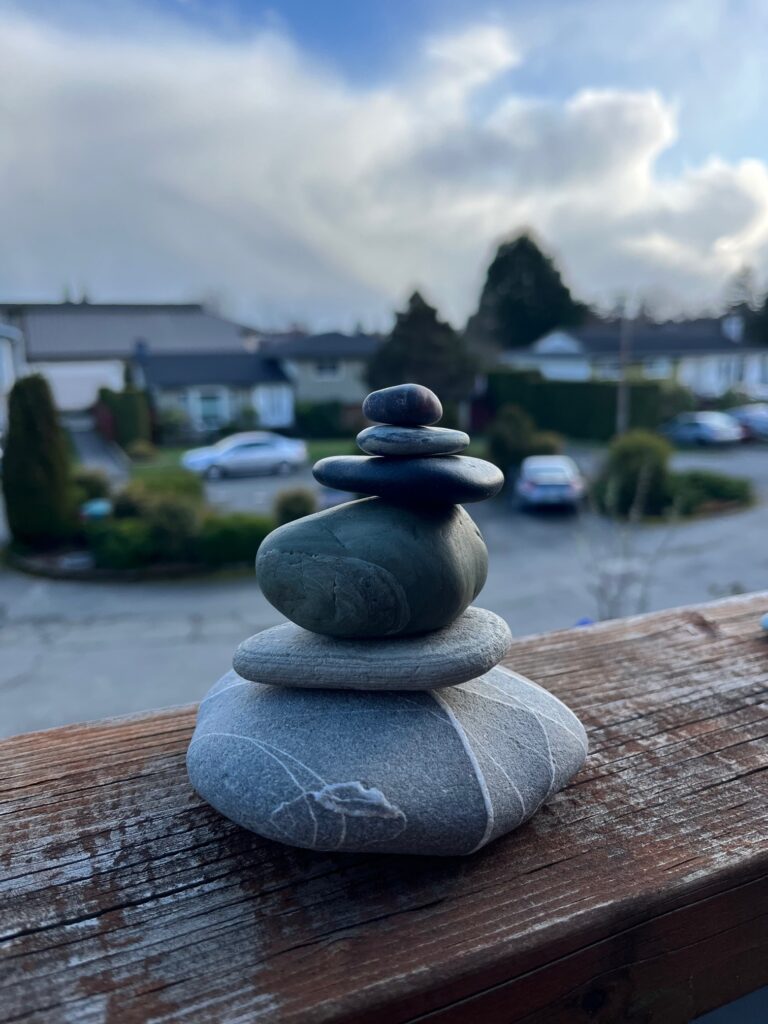
When I first began trying to balance the rocks, I chose the ones that looked easiest to balance, flat and smooth. I found success pretty quickly with these rocks, and my confidence was high; however, the process became harder as the rocks became less ideal. I enjoyed the process becoming harder; it made me slow down and focus more intentionally while stacking the rocks. When I was stacking the rocks, that was the only thing on my mind: how can I get this rock to balance? It was a very enjoyable process and allowed me to relax and reset during the business of the end of the semester. I felt that doing the rock balancing with rocks I had already collected, and so already had a connection with, allowed me to connect even more with them.

6 rocks balancing on each other
4 rocks balancing on each other

Connecting Rocks to BC Curriculum

I wanted to investigate how my passion for rocks could be connected to the BC curriculum in different ways, so I can expand on what I have learned in my inquiry project with my students. As I said at the beginning of my inquiry, there is a direct connection to the BC Science 5 curriculum with content on different local earth materials and the rock cycle. As well as in secondary grades, the subject of Geology is offered as a science elective.  I also mentioned how there can be a connection found in the First Peoples Principle of Learning and Indigenous Knowledge. Which I explored more in my last post, where I found a very resourceful website on the art of rock balancing and stacking. On that website, I found this lesson for elementary students on balancing rocks, which can be cross-curricular between science and art and is a great way to engage with your natural environment.

This made me realize a great way to bring my passion for rocks into the classroom is through art! There are so many great art projects that can be done using art that have students engaging with their environment and learning different mediums of art. For example, rock painting, students can collect rocks from their school grounds and paint them to create a class rock garden. Another example is that natural objects are done in natural spaces. This is when you use different natural objects to create art through patterns and colour. This would be a great activity to spark students’ curiosity for the outdoors and another great opportunity for cross-curricular into the science field.

Examples of different nature art I have done in the past:

Nature art I made with leaves, sticks and moss-covered rocks.
Nature Art, I made at the beach with rocks, driftwood, and charcoal.
Rock art I made for an Art Inquiry project.

I also explored the website I found above more and found a lot of different great lessons surrounding or connecting to rocks that could be used in a classroom. The website seems like a great free resource website for new teachers to check out. I also remember seeing a whole page about rocks on the Focus Ed resources Live It that I would be very curious to explore more when I have my teacher email set up! I feel like this is only the beginning for me, and as I begin my teaching degree, I will find more ways to connect my own and my students’ passions to the curriculum.

Indigenous Connections

When researching what connections Indigenous people have with rocks and how their healing properties may differ from what I have found earlier, I stumbled across this website. The website is a source from UBC on Decolonizing Teaching, Indigenizing Learning and has a page on stones and balancing. The page was super informative and provided how teachers could prepare for a lesson on stones and balancing. There is information on how to prepare the students, practicing humility, additional sources, BC curriculum connections, First Peoples’ Principles of Learning, and inviting the community. The page also included a video interview with Jock Langlois about his healing journey with finding balance in life and how rock stacking has helped him and others.

I had not thought about how a healing property of rocks could be used in a process towards healing. Jock’s story about the act of balancing rocks really touched me and made me curious about finding balance myself through rock stacking, which will now be one of my future inquiry blog posts. I also learned about how in Indigenous peoples’ culture, rocks, spirits and stories to tell. Rocks are often thought of as ‘Grandfathers’ to Indigenous people. A point that was made that really stood out to me was “Stacking rocks symbolizes creation and connecting the spirit of the rock to ourselves as the rock standing requires concentration and focus and leads to healing.” This page will also be beneficial for me to use when investigating how I can connect rock identification, collecting, and now balancing to the BC curriculum.

Healing Properties of Rocks

The next step I want to take in my rock identification process is learning more about the healing properties of the rocks I have found. Luckily, many features within the app can teach you about the different healing properties rocks have, their different uses, and their different qualities. I have always loved rocks and often carry them in my pocket to use as a natural fidget. I love the smoothness of rocks and find it calms me to fidget with a natural object; however, I have never thought to look into what the healing properties of the rocks I fidget with may be and how that may add to the calming feeling I get.

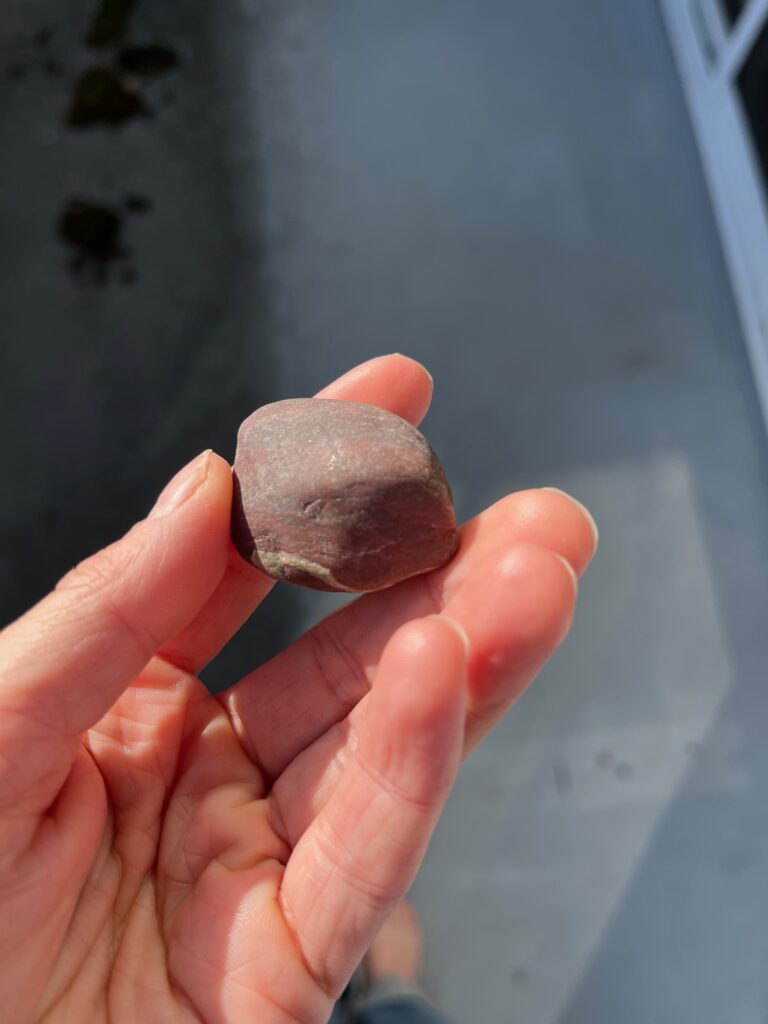
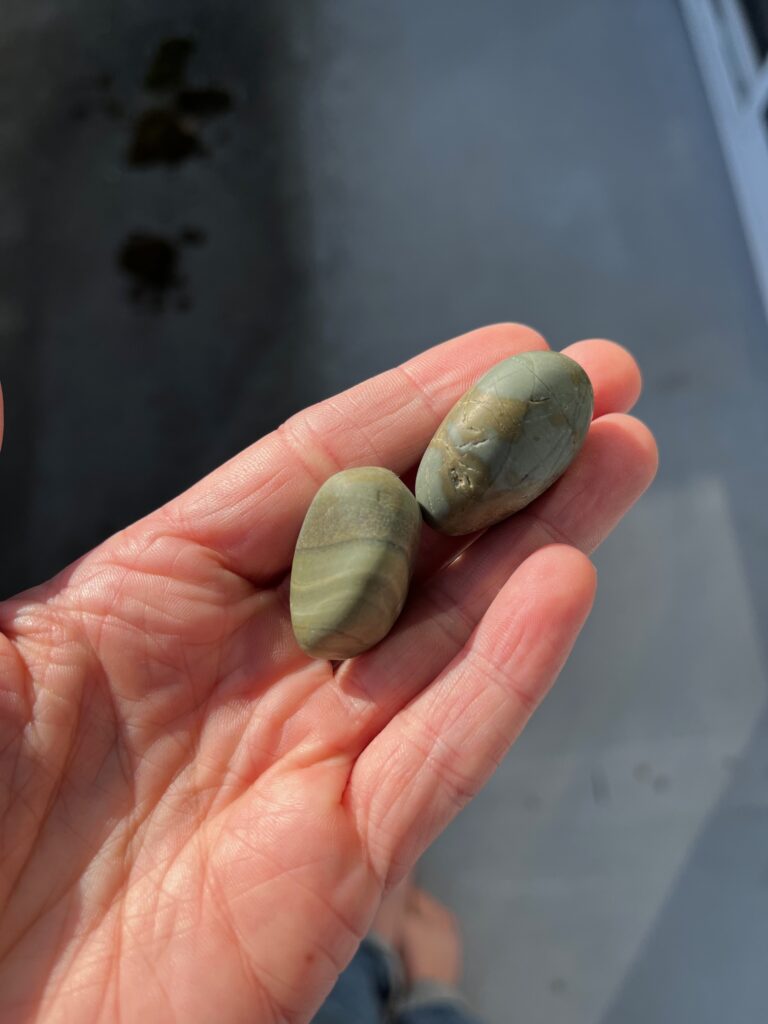
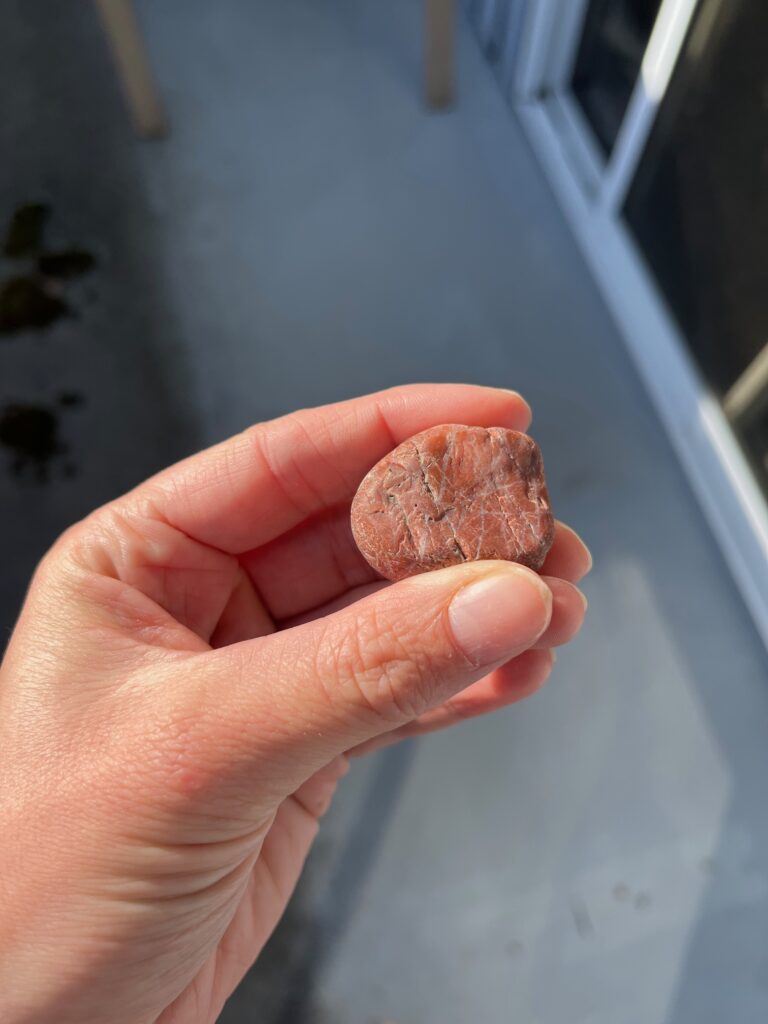
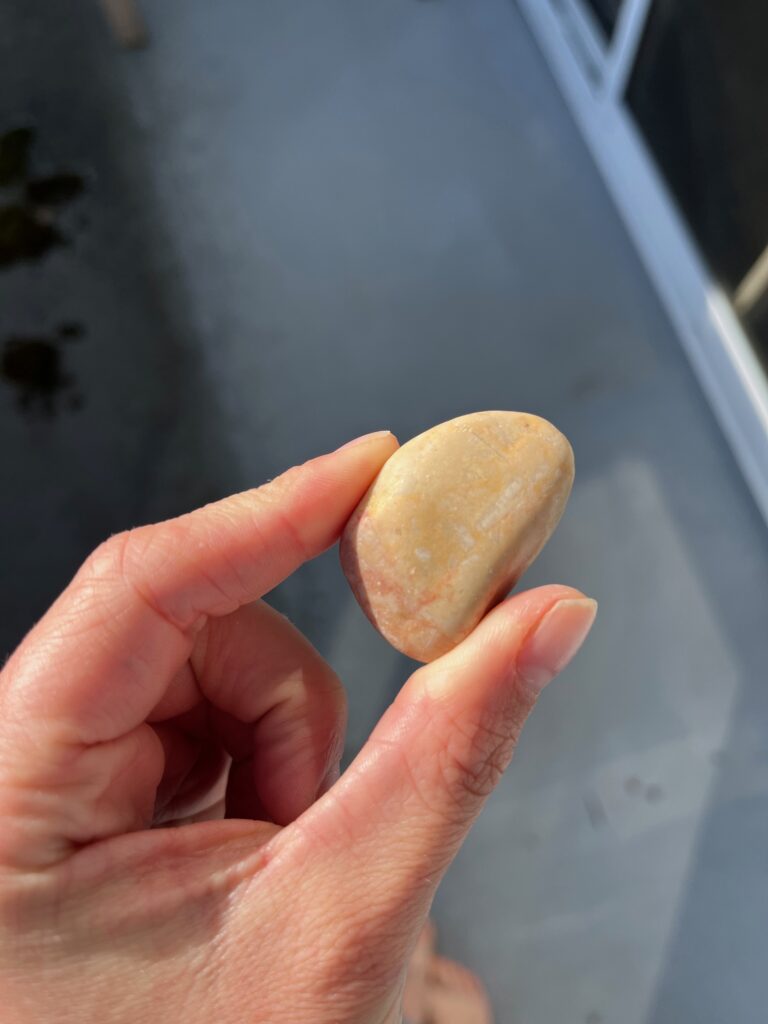
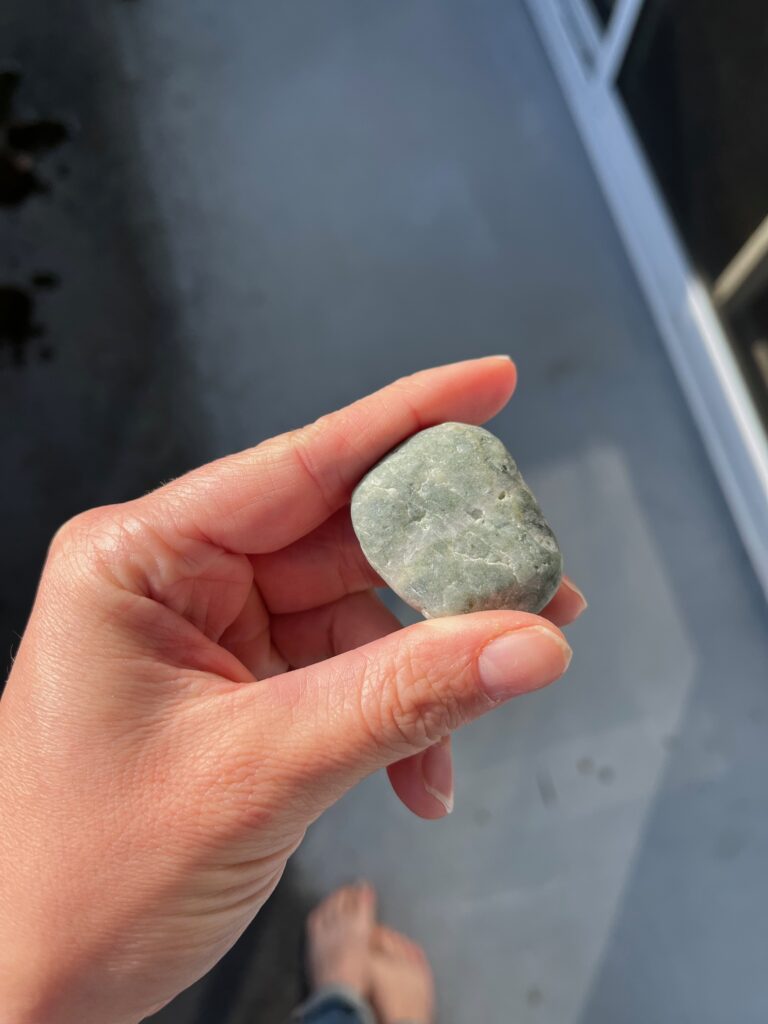
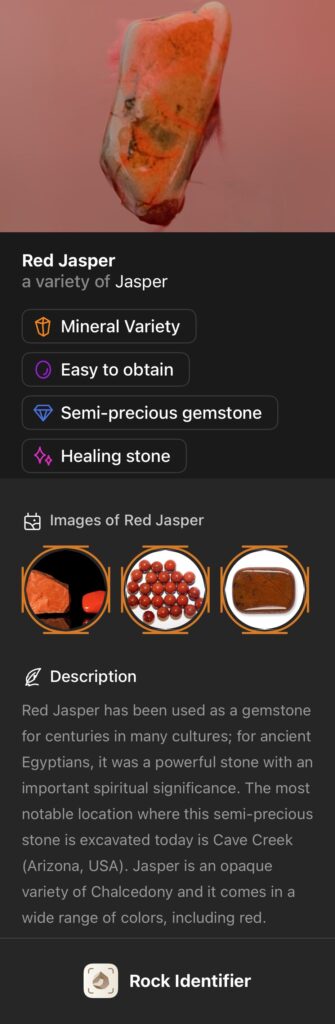
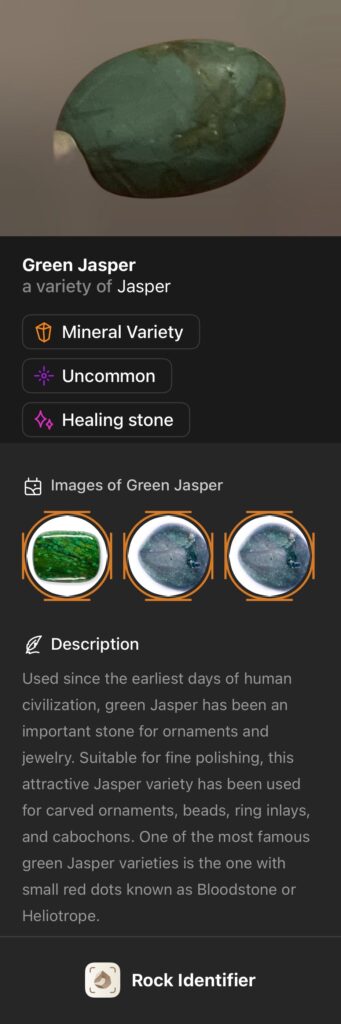
              In my collection, the rocks that have healing properties are red jasper, green jasper, brecciated jasper, milky quartz, aventurine, and serpentine. Although all three jaspers have similar healing properties, there are some differences between them.  Red jasper is known as a grounding stone that provides a sense of balance and stability. Red jasper can increase creativity and motivate you to get things done. Green jasper is also a grounding stone but promotes strength and stamina of the mind, body, and spirit. It can also help provide motivation and endurance for success. It also has a very calming energy and is known to relieve stress. Whereas brecciated jasper is a grounding stone that people employ to restore vitality and improve focus. It is said to remove negative energy and overcome feelings of shame and guilt, and encourages strength and positive energy.

Red Jasper
Green Jasper
Brecciated Jasper

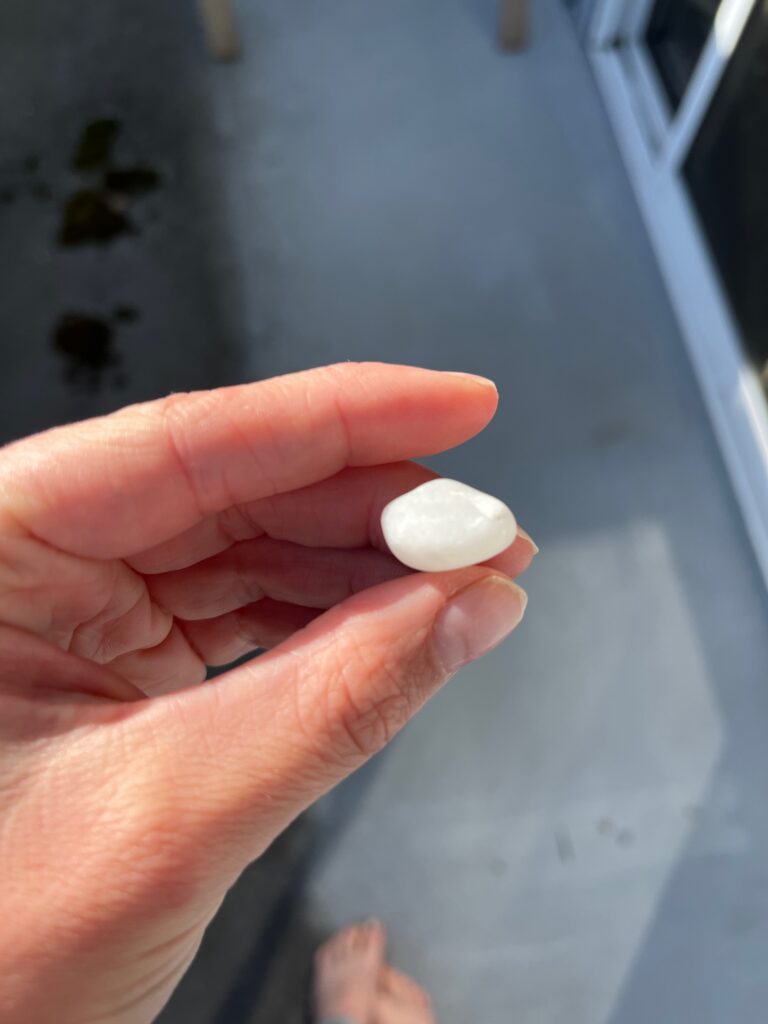
              Serpentine’s is known for its strong connection to Mother Earth and could strengthen your connection with the environment around you. It is a recommended stone to have while meditating outside and can enhance wisdom and help retrieve lost memories. Aventurine is known to be an energy-amplifying stone and can help with manifestation. It may bring good fortune and prosperity, and is often thought of as a good luck stone. On top of that, it is also known to have mood-boosting abilities and bring happiness and vitality. Milky quartz is known to be a very powerful stone that can be cleansing for the whole body. It is thought that it can boost concentration, memory, and communication. Milky quartz is especially interesting as it is believed to help with healing physical illness, such as headaches, migraines, motion sickness, bladder infections, and skin disorders.

Serpentine
Aventurine
Milky Quartz

              I have not been a huge believer in the power of crystals and natural remedies in the past; however, I had never really investigated them before. After learning more about the rocks I have and what healing properties they may have, I understand it more and found it very interesting to learn about. My next curiosity is to see if I can find any information on how local Indigenous peoples use rocks and what healing properties they see in them.

Rock Identifying Process

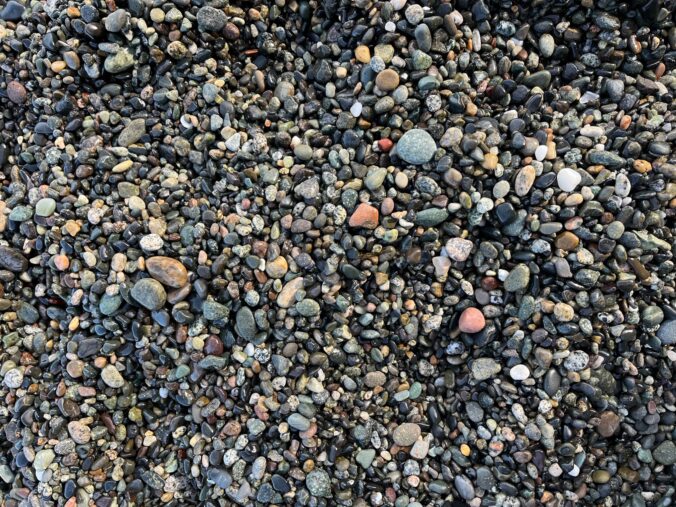
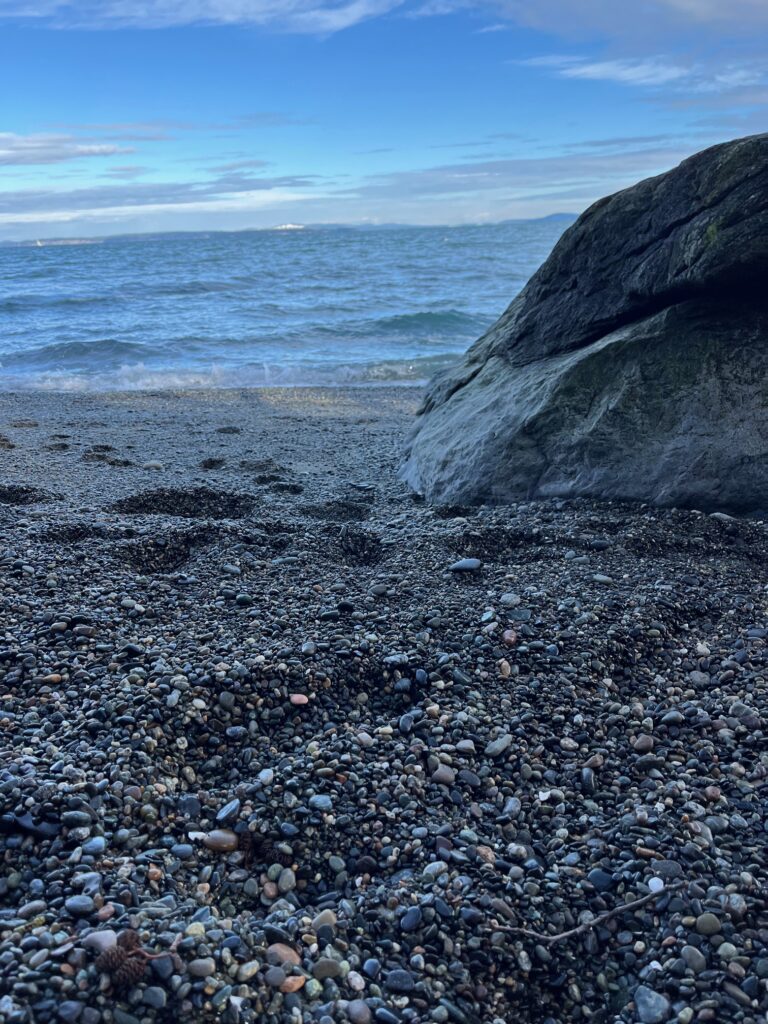
After testing out the app and its different functions, I wanted to get out on a beach and try it out in real time while actively collecting rocks. The other day, I biked to one of my favourite rock collecting beaches near my house, Balmacarra Park. I started as I would usually, while rock collecting, I strolled down the beach scanning for any cool looking rocks and stopping to sift through the rocks every once in a while.

Once I had collected a good amount of rocks I found interesting and found a spot to sit and go through the rocks I had found. I first sorted the rocks into groups: ones I thought I knew what they were, and ones I was unsure of. After I had done that, I started testing myself and seeing if I had made correct identifications or not. I was finding success in identifying quartz, green jasper, red jasper, and basalt.

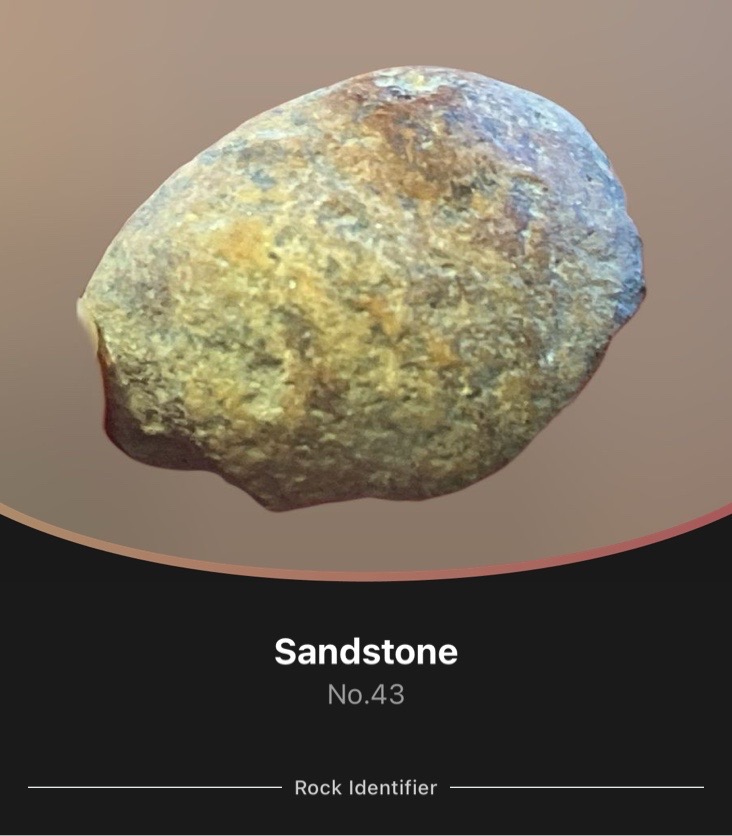
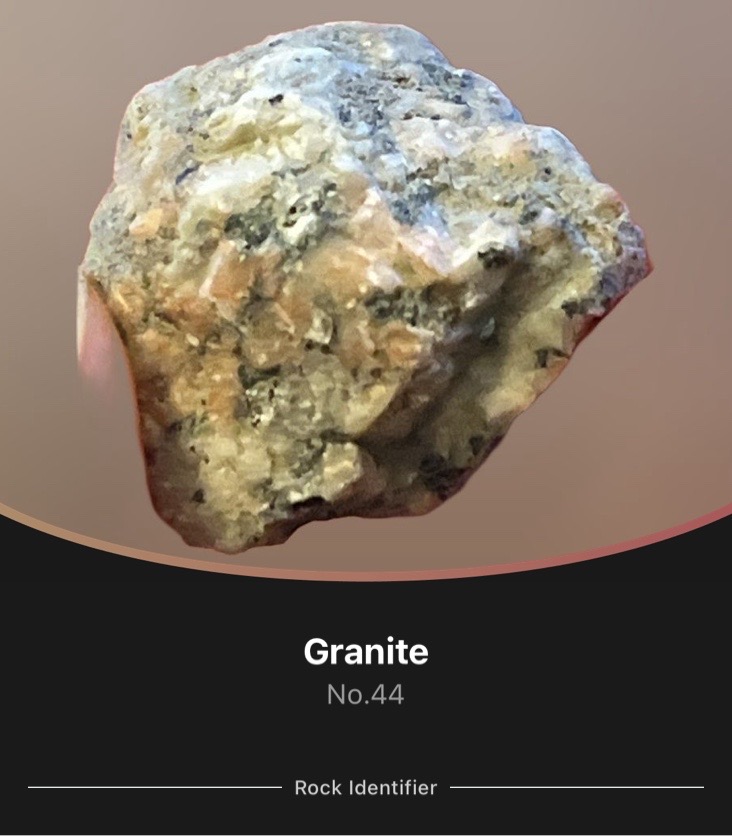
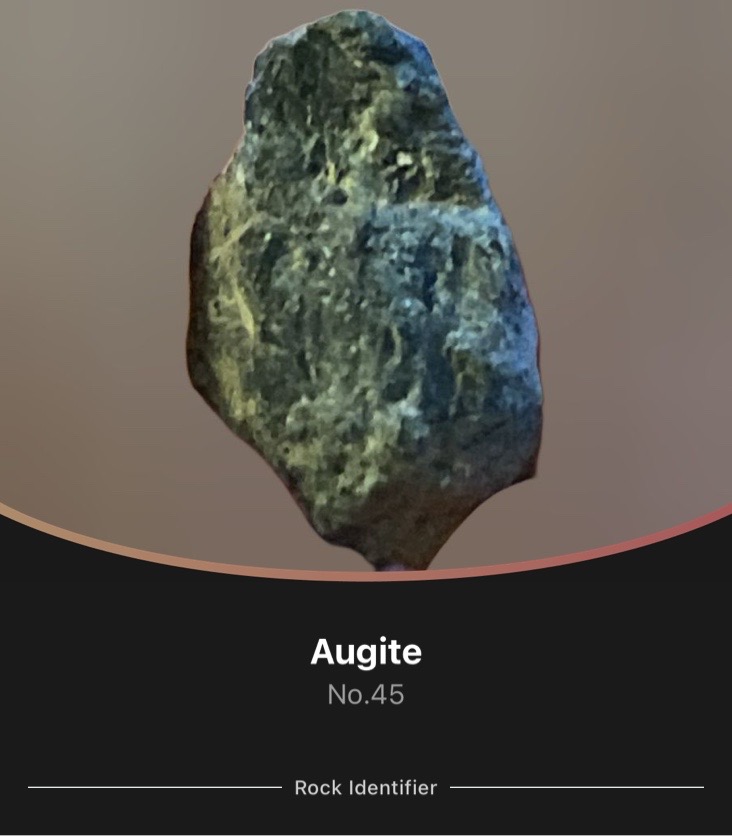
On my way home from the beach, I biked through a gravel parking lot and stopped to see what type of rocks were in the gravel and if they were all the same. I tried to choose a selection of rocks that looked different, and not only were they all different, but there were also a few new rocks added to my collection. I found sandstone, granite and augite.

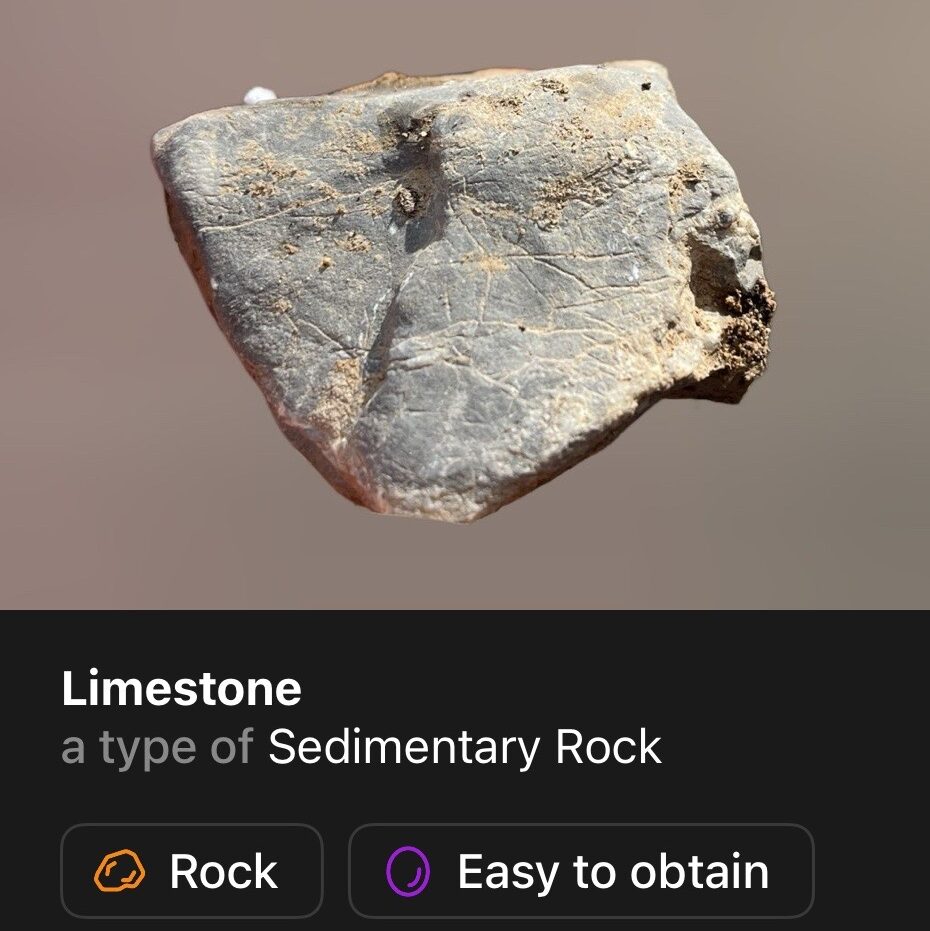
Over reading break, I was visiting Canmore, AB and was excited to see what rocks I could find out on a hike. Although all the rocks did not look the same at first glance, all the ones I identified were limestone, which makes sense as most of the mountains in AB are limestone. I had yet to find any limestone on the beaches of Victoria, so this was still an exciting find.

I also went to Pender Island over reading break and stopped by a beach to see what I could find. I did not find any new types of rocks, but was able to correctly identify quartz, red jasper, and basalt again, which is an exciting progression. The next step is to find some new and unique rocks!

Intro to Using Technology in Rock Collecting

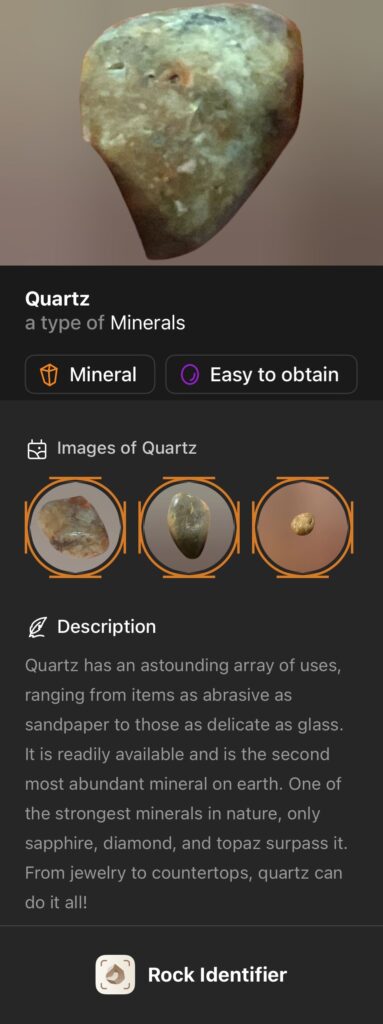
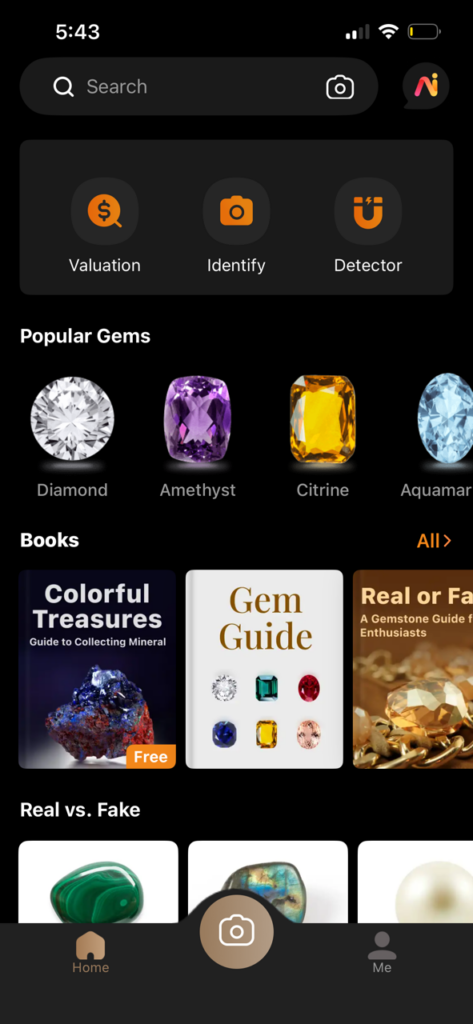
The first app I have chosen to explore is called Rock Identifier. It was the highest rated mobile app in the app store and had lots of features that I was looking for and interested in testing out. I was very excited to be able to learn what type of rock I had found with a quick scan. As well as learn more information about the rock from the scan. The app has a 7-day free trial, then after that, you have to subscribe to the pro version to access the scanning part of the app. I quickly realized I was interested in all the features of the pro version, so I decided to pay, but I would like to still explore other apps and see if I can find any equivalent free options.

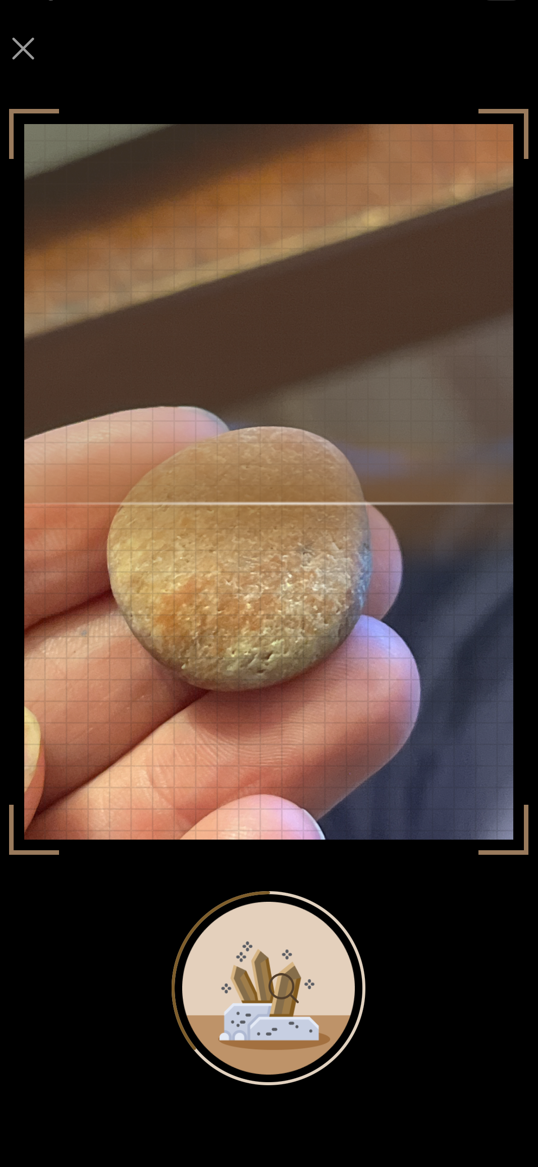
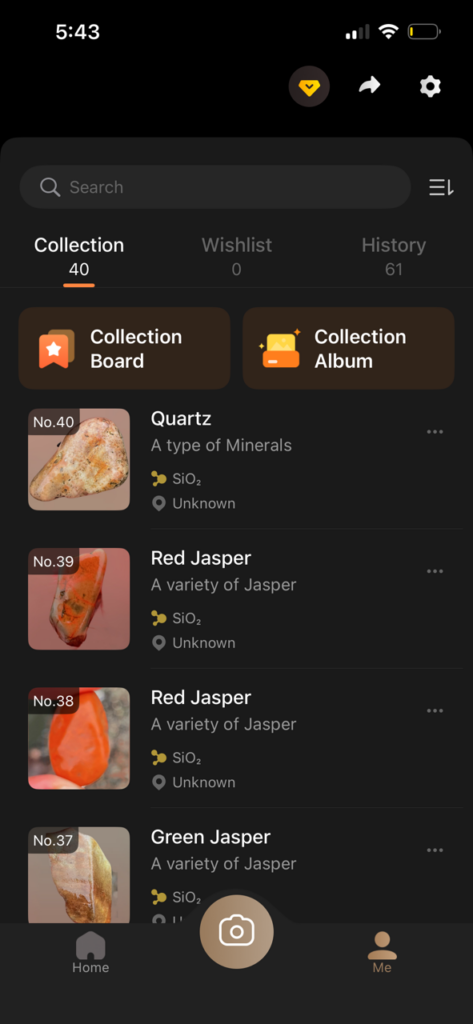
The first thing I did after downloading the app and getting a feel for the features was go straight to my rock collection and start scanning all my favourite rocks. I probably sat in my room scanning and identifying rocks for 30 minutes straight. I have loved collecting rocks and always wanted to know more, but never thought of how there could be a simple technology out there that could help me with it.

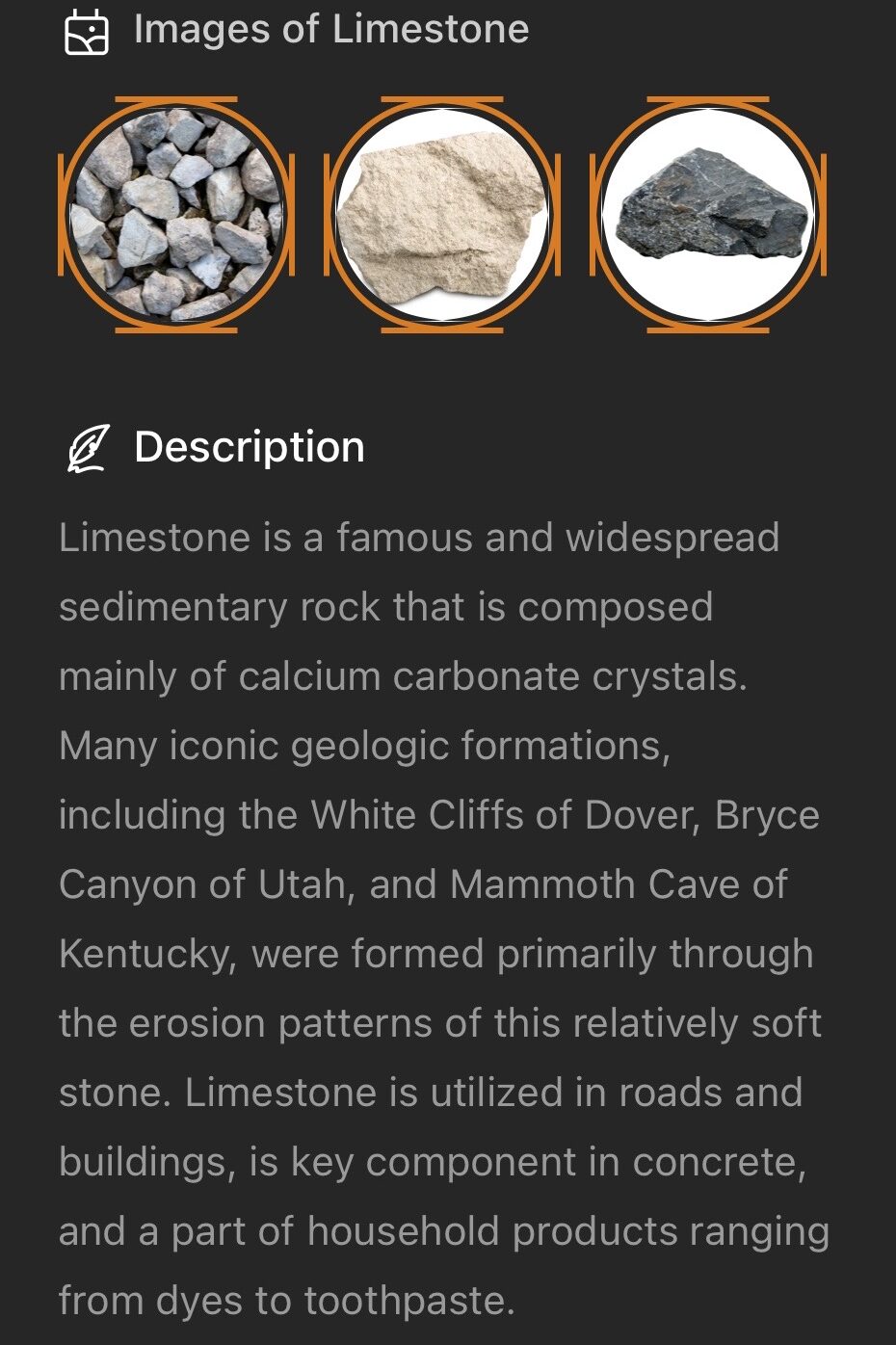
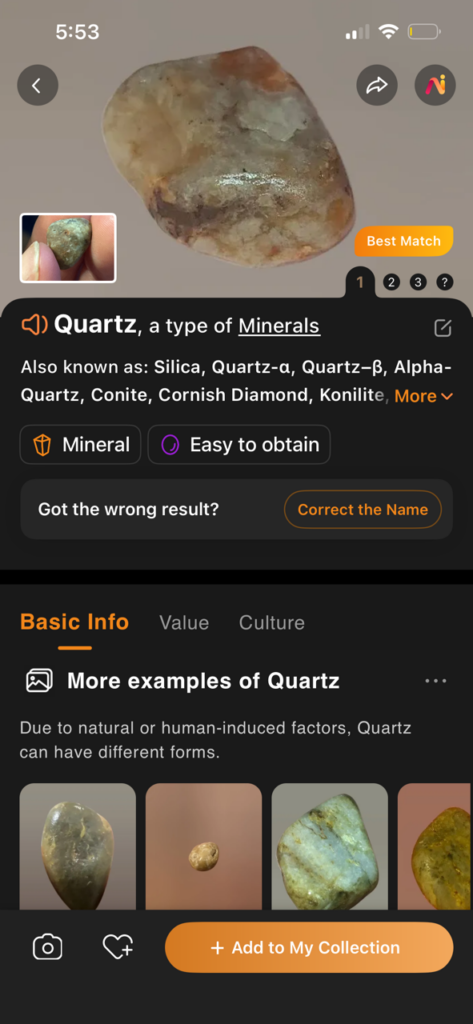
The more I used the app, the more I learned about the features. Once you scan a rock and the app identifies it, it provides you with the rock’s basic info, value, and culture. Under the basic info, there are key facts, the rock’s description, how to identify it, physical properties, chemical properties, formation, age distribution, and usage. The app also has suggested books for rock collectors and access to different articles on rocks and rock collecting. Another section of the app includes an educational section on how to tell if rocks/gems are real vs fake. There is also a huge collection of popular and rare rocks, so you can learn about all types of rocks.

As I continue to explore the app and my journey of rock collecting, I hope to learn more about the local rocks and how to start identifying rocks on my own. My goal is to be able to identify the more common rocks on my own without the app on my next rock collecting journey, as well as find a new type of rock to add to my collection.

Inquiry Blog Introduction

For my inquiry project, I have decided to focus on one of my passions… ROCKS! For anyone who knows me, they know I love collecting rocks and I am often found with rocks in my pocket. My love for rocks definitely started when I was a kid; I remember having multiple rock collections over the years. However, when I reached high school, the passion was put on hold until university. During my first year at university, which was 2020/2021 during COVID, the beach became my escape, and my love for rock collecting was reignited. Since then, whenever I am at the beach, I am always searching for cool rocks to add to my collection. It has reached a point where enough people know about my obsession that I often get questions about rocks, and I do not always have answers. That is what has led me to focus my inquiry project on learning to identify rocks found on Victoria’s beaches. I also want to learn more about the healing properties some rocks may have. Additionally, I am curious about the connections and uses of different rocks by the local Indigenous peoples.

           In connection to technology, I will be exploring different rock identifying apps and see which works best and how to then learn ways to be able identify them on my own. I am curious to explore the different ways the apps use technology to be able to identify rocks. I will also be doing research on different healing properties and other uses that different cultures have for the rocks I find.         

This inquiry project connects to the BC Science curriculum in multiple ways. It directly connects to Science 5, where students learn about different local earth materials and the rock cycle. Similar geology topics appear within the content of other grades’ science curriculum. Another connection found throughout the science curriculum is First Peoples’ knowledge of the land and the connection their culture has with the land and their environment. 

© 2026 brynn blogs

Theme by Anders NorenUp ↑